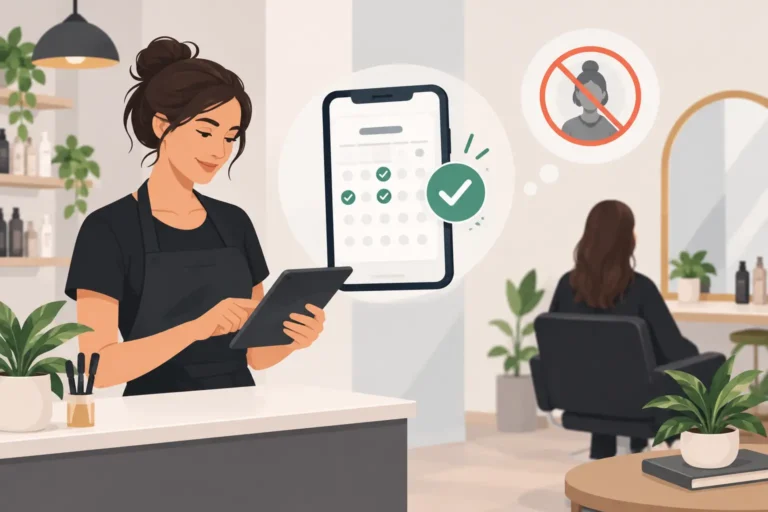
A colour appointment left empty at 2pm is not just an inconvenience. It is lost revenue, unused staff time and a gap that can throw off the rest of the day. Learning how to reduce salon no-shows comes down to making appointments feel clear, valuable and easy for clients to manage before they become a problem.
The aim is not to punish loyal clients for the occasional genuine emergency. It is to build a booking process that sets expectations early, follows up at the right moments and gives you a practical way to fill space when plans change.
Why salon no-shows happen
Most no-shows are not personal. Clients forget, book too far ahead, misunderstand the time, or feel awkward cancelling late. Some have booked with more than one salon while deciding where to go. Others simply do not appreciate the impact of an empty appointment, especially for longer services such as colour corrections, extensions or nail art.
That is why a single fix rarely works. A reminder may help a client who has forgotten, while a clear cancellation policy is more effective for someone who regularly changes plans at short notice. Your approach should cover both.
Start by looking at your diary for patterns. Are missed appointments more common on Saturdays, after online bookings, with new clients, or for a particular service? If a barber sees gaps mainly in early morning slots, the solution may be a reminder sent the evening before. If a nail technician loses lengthy afternoon bookings, a deposit or stronger cancellation terms may be more appropriate.
Make your booking rules impossible to miss
Clients should know what happens if they cancel, reschedule or do not attend before they press book. Keep the policy short, specific and written in plain English. Avoid hiding it in a long block of booking terms that nobody reads.
State how much notice you need, how clients can change an appointment and what happens with deposits or late cancellations. For example: “Please give at least 24 hours’ notice to move or cancel your appointment. Late cancellations may lose their booking deposit.” Use terms that match the way you actually operate. A policy you do not enforce teaches clients that it is optional.
Display the policy at booking and include it in the confirmation message. It can also be visible in your salon and on your social profiles, but the booking journey is where it matters most. A client who sees the terms before confirming has less room for misunderstanding later.
There is a balance here. Rules that are too harsh can discourage a new client from booking, particularly for a lower-cost service. Many salons choose firmer terms for longer, high-demand or new-client appointments, while giving regular clients reasonable flexibility. That is a commercial decision, not a one-size-fits-all rule.
Send reminders clients can act on
A confirmation message gives clients confidence that the appointment is in the diary. Reminders reduce the chance that it disappears from their mind altogether. The best reminders do more than repeat a date and time. They make the next action obvious.
Send a confirmation as soon as the booking is made, then a reminder far enough in advance for the client to rearrange if needed. For many salons, a reminder 24 to 48 hours before the appointment works well. If you take a lot of next-day bookings, an additional message the evening before can be useful.
Each message should include the service, date, time, salon location and a simple route to cancel or reschedule. Do not make clients ring during your busiest hours just to move an appointment. Friction creates late cancellations and no-shows. A straightforward change process means you get the slot back while there is still time to fill it.
Automated reminders are particularly useful when your team is busy with clients. They keep communication consistent without asking reception staff or independent professionals to chase every booking manually. UpTor helps salons, barbers and beauty professionals manage online bookings with automated appointment confirmations and reminders, so clients receive the right information without adding another task to the working day.
Ask for a commitment when the appointment warrants it
For appointments that reserve a significant part of the diary, it is reasonable to ask clients for a stronger commitment. This might be a booking deposit, a card-holding policy where available through your chosen provider, or a clear prepayment arrangement handled outside your booking system.
The right approach depends on the service and your clientele. A 15-minute fringe trim may not need the same protection as a three-hour balayage appointment. Deposits can be especially useful for new clients, specialist treatments, peak Saturday slots and appointments requiring products to be prepared in advance.
Explain the reason without sounding defensive. You are reserving skilled time that cannot easily be sold again at short notice. Tell clients whether the amount comes off their final bill and when it may be forfeited. Clarity tends to create less pushback than apologising for your own policy.
Be consistent once you set the rule. Waiving it repeatedly for people who cancel late makes it harder to apply fairly to everyone else. You can still use judgement when a long-standing client has an exceptional circumstance, but exceptions should remain exceptions.
Make rescheduling easier than disappearing
A client who needs to move an appointment is not necessarily a lost booking. They may still want the service, just not at that time. Treat rescheduling as a normal part of managing a busy diary rather than a failure.
Online booking gives clients a way to view availability outside salon hours, when many of them are most likely to sort out their week. If they can quickly choose another suitable slot, they are less likely to leave the appointment untouched and hope for the best.
You can also protect your day by setting sensible booking rules around how late people can book, cancel or reschedule online. Leave enough time for your team to prepare, but avoid closing the diary so early that you lose the chance to fill a cancellation. The best setting depends on your service mix, staffing and how often you receive last-minute demand.
Use a waitlist to turn cancellations into bookings
Cancellations will still happen. The goal is to replace them quickly instead of accepting an empty chair. A waitlist is one of the most practical ways to do that.
Ask clients whether they would like an earlier appointment when they book, or keep a simple list of people waiting for popular days and times. When a slot becomes available, contact the most suitable people first. Someone who works locally may be able to take a weekday lunchtime cancellation, while another client may only be available after school or on Saturdays.
This works best when your client records are accurate. Notes such as preferred stylist, service, usual availability and allergy information help you offer a replacement appointment that genuinely fits. It is better to fill a cancellation with the right service than to create a rushed booking that causes problems later.
Do not rely on a single social media post to fill every gap. It can help for last-minute availability, but it is unpredictable and may train some clients to wait for discounts. A waitlist lets you target people who have already shown they want an appointment.
Train the team to handle no-shows consistently
If several people answer messages or manage the diary, agree on how no-shows and late cancellations are handled. Otherwise, clients receive different answers depending on who they speak to, and your policy loses credibility.
Create a simple process. Record the missed appointment in the client notes, send a polite follow-up if appropriate, and decide whether future bookings require a deposit or confirmation. Keep the tone professional. A message such as, “We missed you today. Please contact us before booking again so we can arrange your next appointment,” is firmer than silence without turning a difficult moment into an argument.
It is also worth reviewing whether your own booking details are causing confusion. Check that service durations are accurate, staff availability is up to date and confirmation messages show the correct location. Avoidable errors from the salon side can look exactly like a client no-show.
Measure the result, then adjust
Track no-shows and late cancellations each month by service, staff member and booking source. You do not need a complicated report to spot whether changes are working. Even a small reduction in missed longer appointments can make a noticeable difference to weekly takings.
If reminders reduce forgotten appointments but Saturday cancellations remain high, test a deposit policy for peak times. If new clients are the main issue, ask for confirmation closer to the appointment. Change one part of the process at a time where possible, so you can see what has made the difference.
No-show reduction is really about respecting the value of your time while making it easy for good clients to stay booked. Put clear expectations around every appointment, communicate before the slot is at risk, and keep a practical route to replace cancellations. That gives you a calmer diary and more control over the hours you have worked hard to fill.