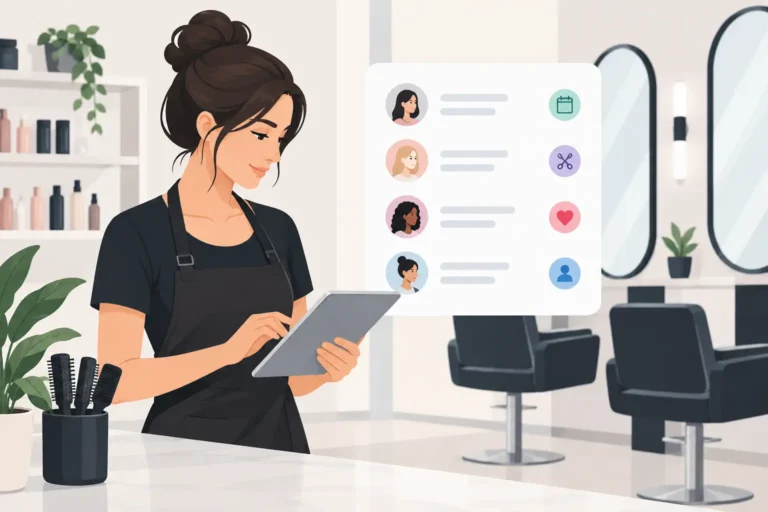
A client arrives for a colour appointment and says, “Let’s do the same as last time.” If the stylist who saw them six weeks ago is off, can anyone quickly find the formula, toner, timings and notes? A good client record system for salons turns that potentially awkward moment into a normal part of a well-run service.
For busy UK salons, barbershops and independent beauty professionals, client records are not just a digital address book. They are the detail behind more consistent appointments, clearer team handovers and fewer repeated questions. The right system should save time at reception and at the chair, rather than create another admin job at the end of the day.
What a salon client record system should do
At its simplest, a client record stores contact details and appointment history. That is useful, but it is rarely enough for a service-led business. A useful record gives the person providing the treatment the context they need before the appointment begins.
For a hair salon, this may include colour formulas, patch test dates, allergies, previous treatments and product recommendations. A barber may need preferred clipper grades, beard shape, usual service length and notes on how the client likes to be styled. Nail and beauty businesses may need treatment history, consultation details, sensitivities and aftercare notes.
The goal is not to record every conversation. It is to capture details that make the next appointment safer, smoother or more personal. When notes are easy to find and update, staff are more likely to use them properly.
A strong system should also connect records with the diary. Seeing a client’s previous appointments alongside their upcoming booking helps staff prepare in advance. It can show whether they regularly book with a particular team member, how often they visit and which services they tend to choose.
Why better records improve the client experience
Clients notice when they do not have to repeat themselves. Remembering a preferred fringe length, a previous reaction to a product or the fact that someone prefers a quiet appointment shows care without making the interaction feel scripted.
This matters especially when more than one person works with the same client. Without shared records, each appointment can feel like a fresh consultation. With clear notes, a new stylist, barber or therapist can pick up the service with confidence while still checking that the client’s needs have not changed.
There is a commercial benefit too. Accurate appointment history helps you have more relevant conversations. A client who last had a colour service several months ago may be ready for a refresh. Someone who always books a gel manicure may appreciate being asked whether they want removal time included. This is not about pushing extras. It is about making sensible suggestions based on what the client already values.
Records can also reduce avoidable mistakes. Notes about allergies, patch tests, sensitivities or agreed treatment plans should be visible before work starts. Software supports good processes, but it does not replace professional judgement or proper consultation. Staff still need to confirm important details at each visit, particularly where a client’s health, skin or hair condition may have changed.
The records that are worth keeping
A salon does not need a complicated database to deliver a better service. Start with the information your team genuinely uses. For most businesses, that means basic contact details, appointment history, service notes, preferences and any consultation information relevant to safe treatment delivery.
For many salons, the most useful details sit in appointment notes. Keep these practical and consistent. “Warm brunette, used formula recorded in notes, client prefers subtle face frame” is more useful than “colour done”. For barbers, a short note such as “skin fade, number two on top, tidy natural beard line” can save time and prevent guesswork at the next visit.
Avoid writing subjective or unnecessary comments. Notes should be professional, relevant to the service and understandable to another member of the team. If a note would feel uncomfortable if the client read it, it probably does not belong in their record.
It is also worth agreeing simple standards across the team. Decide where formulas are recorded, how consultations are logged and which abbreviations are acceptable. Consistency is what makes records useful when the diary gets busy.
Keep data protection practical
Client records contain personal information, so treat them with care. Collect only what you need, make sure the information is accurate and limit access to staff who need it to do their role. Your approach should reflect UK data protection requirements, including how long you retain records and how you handle requests from clients.
Paper cards in an unlocked drawer can be hard to manage, particularly in a shared salon. Digital records can make information easier to organise and access, but only if staff accounts and working practices are handled responsibly. A system is helpful; clear policies and staff training still matter.
How a client record system saves time in the diary
The biggest gain is often not a dramatic one. It is the small interruptions that disappear: searching through old text messages, asking a colleague to remember a formula, checking a notebook, or calling a client because the booking does not show enough detail.
When online booking, appointments and records work together, information is collected and stored in the same place. Staff can review the day’s clients, see relevant history and add a note while the appointment is still fresh. That reduces the end-of-day pile of admin that often gets postponed and then forgotten.
It also supports better communication around bookings. Appointment reminders and confirmations can reduce missed appointments, while a clear client history helps staff understand whether a cancellation is unusual or part of a pattern. If a space opens up, a waitlist can help fill it without the team manually working through old messages.
This is where an all-in-one platform can be more practical than separate tools. UpTor combines online bookings, staff schedules, client records, automated reminders and confirmations, plus waitlists for cancelled slots. For a small business, keeping these everyday tasks in one place can mean less switching between apps and fewer details falling through the gaps.
Choosing the right client record system for your salon
The best choice depends on how you work. A solo nail technician may need a simple mobile-friendly way to check notes between appointments. A salon with several chairs may place more value on shared records, staff schedules and a live diary. A barbershop with walk-ins may need a system that keeps booked clients and day-to-day availability easy to manage.
Before choosing software, test the ordinary tasks rather than only the feature list. Can you find a client record in a few seconds? Can a team member add a useful note without several clicks? Can you see previous appointments while looking at the diary? Does the booking journey collect the information you need without putting clients off?
Consider these practical questions as well:
- Will every relevant team member use the system consistently?
- Can you move existing client information across without creating weeks of cleanup?
- Does the price suit your current business, not just a larger salon you may become later?
- Can clients book online at times that suit them, while you remain in control of your availability?
A free plan can be a sensible way to test whether a system fits your routine. The right platform should feel easier after a few days of real bookings, not require your team to change everything about how they work.
Make records part of the appointment, not an afterthought
The system only works if records stay current. Build a short update into the end of each appointment. Before the client leaves, record the formula, treatment detail, preference or follow-up point that will matter next time. It should take moments, not minutes.
Give staff ownership of their notes, but make it clear that records belong to the business process rather than one individual’s memory. Review a handful of records occasionally to spot gaps and reinforce your standards. This is particularly useful when new team members join or when you introduce a new treatment.
A client record system is at its best when clients barely notice it. They simply experience a salon that remembers them, a team that communicates well and appointments that start without unnecessary backtracking. Start with the details that improve the next visit, keep them accurate, and let the admin work quietly in the background.